
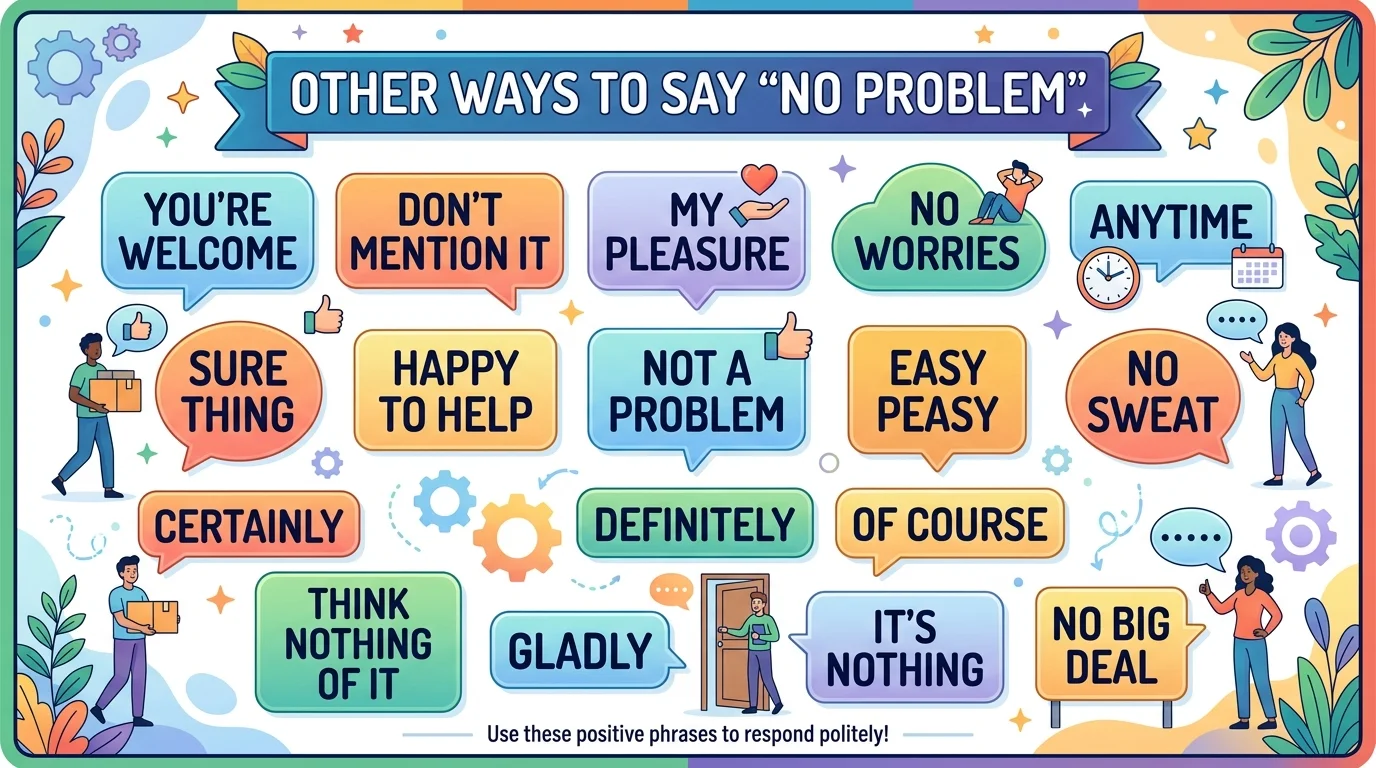
The best other ways to say no problem include “You’re welcome,” “Happy to help,” “Anytime,” “Of course,” “Don’t mention it,” and “Glad I could help.” These alternatives help conversations sound more natural, professional, friendly, or thoughtful depending on the situation. Many people use these phrases in customer service, workplace communication, texting, casual conversations, and professional emails to sound more polite and conversational.
Understanding Other Ways to Say No Problem ✨
OTHER WAYS TO SAY NO PROBLEM are useful because repeating the same response in every conversation can sound robotic and repetitive. While “no problem” is friendly and widely accepted, many people prefer different alternatives depending on tone, setting, relationship, and communication style.
Modern communication focuses heavily on natural conversation flow and emotional tone. Some situations require professional wording while others feel better with casual, warm, or playful responses. Choosing the right phrase helps conversations feel smoother, more respectful, and more human written.
Another reason people search for other ways to say no problem is workplace communication. In professional environments, some alternatives sound more polished and customer friendly. For example, customer service teams often prefer phrases like “happy to help” because they sound warmer and more service oriented than a simple “no problem.”
Social communication also changed through texting, online messaging, and social media conversations. People now use different responses depending on whether they are talking to friends, coworkers, customers, family members, or romantic partners.
Whether someone is responding to thanks in business communication, casual texting, customer service, emails, or friendly conversations, using varied alternatives helps communication feel more natural, polite, and engaging.
Polite Other Ways to Say No Problem ✨
Polite alternatives help conversations sound respectful and professional while still remaining warm and approachable. These phrases work especially well in workplaces, customer service, formal communication, and professional environments.
Polite wording also creates positive impressions because it shows attentiveness and good communication skills.
Polite Other Ways to Say No Problem ✨
• You’re very welcome 💖
• Happy to help 🌸
• Glad I could help ✨
• It was my pleasure 💕
• Of course 💫
• Don’t mention it 💙
• Anytime 🌱
• Absolutely 🤝
• I’m always happy to assist 🌟
• No worries 💖
When to use it: Professional conversations and polite daily communication.
What vibe it gives: Respectful warm and professional.
Professional Other Ways to Say No Problem ✨
Professional responses are important in business settings because communication style affects workplace relationships and customer experience. Some alternatives sound more polished and professional than casual responses.
Professional wording also helps emails and conversations feel more thoughtful and customer friendly.
Professional Other Ways to Say No Problem ✨
• Happy to assist 💖
• It was my pleasure to help 🌸
• I’m glad I could support you ✨
• Always happy to help 💕
• Certainly 💫
• It’s my pleasure 💙
• I appreciate your kind words 🌱
• Thank you as well 🤝
• I’m here whenever you need help 🌟
• Of course happy to help 💖
When to use it: Workplace communication customer service and emails.
What vibe it gives: Polished respectful and professional.
Casual Other Ways to Say No Problem ✨
Casual alternatives help conversations feel relaxed, friendly, and natural. These phrases are common in texting, social media chats, and everyday communication with friends and family.
Modern conversational English often sounds better with casual responses because they feel less formal and more human.
Casual Other Ways to Say No Problem ✨
• No worries 💖
• Sure thing 🌸
• Anytime ✨
• You got it 💕
• Totally fine 💫
• Don’t worry about it 💙
• It’s all good 🌱
• Of course 🤝
• Not a big deal 🌟
• Happy to do it 💖
When to use it: Friendly conversations texting and casual communication.
What vibe it gives: Relaxed natural and friendly.
Friendly Other Ways to Say No Problem ✨
Friendly responses create emotional warmth and positive social energy. These alternatives help people feel comfortable appreciated and welcomed in conversations.
Friendly communication is especially important in personal relationships because tone affects emotional connection strongly.
Friendly Other Ways to Say No Problem ✨
• Always here for you 💖
• Glad I could help out 🌸
• Happy to be helpful ✨
• You can count on me 💕
• It was nothing 💫
• Of course anytime 💙
• I’m happy to help anytime 🌱
• Don’t even worry about it 🤝
• That’s what friends are for 🌟
• Anytime at all 💖
When to use it: Friendships family conversations and supportive communication.
What vibe it gives: Caring warm and supportive.
Other Ways to Say No Problem in Customer Service ✨
Customer service communication focuses heavily on positivity, politeness, and professionalism. Businesses often prefer alternatives that sound service oriented and welcoming.
Strong customer communication improves customer satisfaction because people appreciate warm respectful interaction.
Customer Service Alternatives ✨
• Happy to assist you 💖
• It’s our pleasure 🌸
• We’re always happy to help ✨
• Thank you for reaching out 💕
• Glad we could assist 💫
• We appreciate your patience 💙
• Of course happy to support you 🌱
• We’re here whenever you need us 🤝
• Thank you for choosing us 🌟
• It was a pleasure helping you 💖
When to use it: Customer support business replies and service communication.
What vibe it gives: Professional welcoming and positive.
Funny Other Ways to Say No Problem ✨
Funny alternatives make conversations feel playful and entertaining while still sounding friendly. Humor can strengthen social bonds and make communication more memorable.
Funny responses work best in casual conversations where relationships already feel comfortable and relaxed.
Funny Other Ways to Say No Problem ✨
• I accept payment in snacks 😂
• No stress at all 💖
• I survived the task successfully 🌸
• Mission completed ✨
• Your wish is my command 💕
• Barely broke a sweat 💫
• I deserve a trophy now 💙
• Happy to save the day 🌱
• Don’t make this emotional 🤝
• I got you covered 🌟
When to use it: Playful conversations and close friendships.
What vibe it gives: Funny relaxed and cheerful.
Other Ways to Say No Problem in Texting ✨
Text messaging often sounds better with short natural responses instead of overly formal wording. Modern texting culture values quick conversational replies that feel effortless and genuine.
Texting Alternatives ✨
• No worries 💖
• Anytime 🌸
• Of course ✨
• You got it 💕
• All good 💫
• Happy to help 💙
• Sure thing 🌱
• Absolutely 🤝
• Don’t mention it 🌟
• Totally okay 💖
When to use it: Daily texting and online chats.
What vibe it gives: Smooth casual and natural.
Warm Other Ways to Say No Problem ✨
Warm responses help people feel emotionally appreciated and supported. These alternatives sound softer and more emotionally thoughtful than simple casual replies.
Warm communication often strengthens emotional connection and trust.
Warm Alternatives ✨
• I’m always happy to help 💖
• It truly was my pleasure 🌸
• I’m glad I could be there ✨
• You never need to hesitate asking 💕
• Helping you makes me happy 💫
• You’re important to me 💙
• It means a lot that I could help 🌱
• I’m always here if needed 🤝
• I care about helping you 🌟
• Anytime at all 💖
When to use it: Emotional conversations and caring relationships.
What vibe it gives: Gentle supportive and warm.
Why People Use Other Ways to Say No Problem ✨
People use different alternatives because communication tone changes depending on relationships, setting, and emotional context. Varied responses help:
- Improve conversation flow
- Sound more natural
- Create stronger impressions
- Match professional settings
- Build emotional connection
- Avoid repetitive wording
Modern communication values authenticity and tone awareness strongly.
SEO Benefits of Conversational Content ✨
Conversational content performs strongly online because readers prefer natural human sounding communication instead of robotic repetitive language.
Conversational writing improves:
- Readability
- User engagement
- Human written quality
- Emotional connection
- User experience
- Content authenticity
Search engines increasingly reward natural conversational language patterns.
What Not to Do While Responding to Thanks ✨
Avoid:
- Sounding robotic
- Repeating the same phrase constantly
- Using overly formal wording casually
- Sounding emotionally cold
- Giving awkward one word replies repeatedly
Natural communication always feels more engaging and authentic.
Did You Know 🤔
Communication experts say positive conversational responses can improve social connection, workplace relationships, and customer satisfaction because people naturally respond well to warm and respectful interaction.
FAQ About Other Ways to Say No Problem
What can I say instead of no problem
You can say you’re welcome, happy to help, anytime, of course, no worries, or don’t mention it.
What sounds more professional than no problem
Professional alternatives include happy to assist, my pleasure, glad I could help, and always happy to support you.
What is a casual alternative to no problem
Casual alternatives include no worries, sure thing, all good, and you got it.
Why do some workplaces avoid saying no problem
Some businesses prefer more positive customer focused language like happy to help because it sounds warmer and more professional.
What is the friendliest alternative to no problem
Friendly alternatives include anytime, always here for you, and happy to help anytime.
Conclusion ✨
Learning polite other ways to say no problem helps conversations feel more natural, professional, friendly, and emotionally engaging in daily communication. Thoughtful alternatives like happy to help, anytime, glad I could assist, and you’re welcome improve conversation flow while making responses sound more human written and less repetitive. Whether communicating in workplaces, customer service, friendships, texting, or casual conversations, using varied responses creates stronger connection, better communication tone, and a more positive conversational experience overall.