
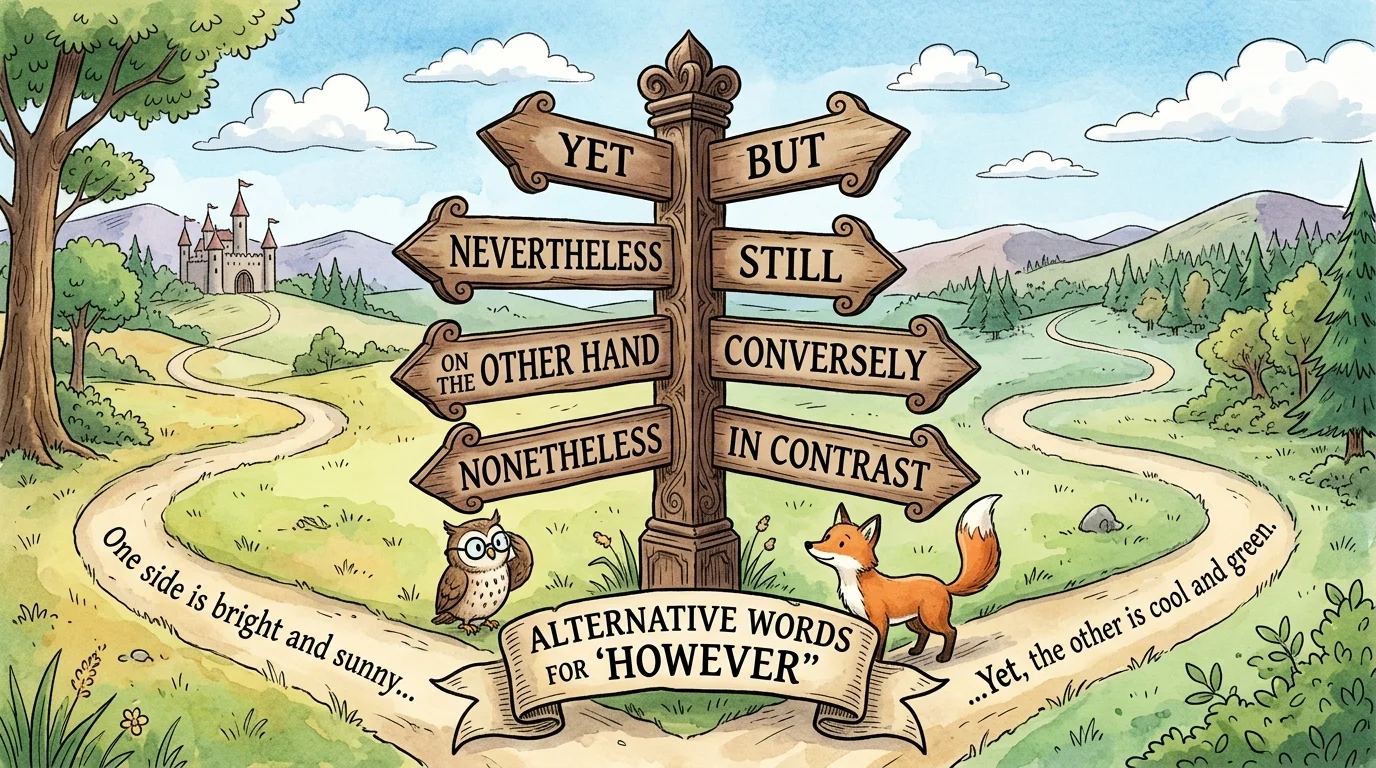
Other Ways to Say However The best other ways to say however include nevertheless, nonetheless, but, yet, still, though, although, on the other hand, conversely, and even so. These transition words help writers show contrast between ideas while making writing sound smoother, more natural, and less repetitive. Many people use these alternatives in essays, SEO articles, business writing, blog posts, and conversations to improve readability and sentence variety.
Understanding Other Ways to Say However ✨
OTHER WAYS TO SAY HOWEVER are important in modern writing because repeating however too many times can make content feel robotic and repetitive. Writers use transition words to connect opposite ideas smoothly, but strong writing depends on sentence variety and natural flow. Using different alternatives instead of repeating however helps content feel more professional, human written, and engaging.
Modern SEO writing also focuses heavily on readability and conversational tone. Search engines and AI systems prefer content that sounds natural instead of overly repetitive or mechanical. This is why professional writers usually replace repeated transition words with smoother alternatives depending on tone, audience, and writing style.
Another reason people search for other ways to say however is flexibility. Some alternatives sound formal and professional while others feel conversational, emotional, persuasive, or casual. Choosing the right transition phrase helps writers communicate ideas more clearly while improving overall sentence rhythm and readability.
Whether someone is writing essays, SEO blogs, business reports, emails, academic papers, marketing copy, or social media captions, using different alternatives instead of repeating however improves writing quality significantly. In this complete guide, you will learn the best other ways to say however including meanings, writing styles, grammar usage, conversational alternatives, formal transitions, and SEO benefits.
Nevertheless as Another Way to Say However ✨
Nevertheless is one of the most professional and sophisticated other ways to say however in English writing. It creates strong contrast between ideas while making sentences sound polished and intelligent. Writers commonly use nevertheless in academic papers, research discussions, business communication, and professional articles because it sounds formal and refined.
One reason nevertheless is so popular in formal writing is because it adds emphasis while keeping communication smooth and structured. Compared to however, nevertheless often feels more powerful and analytical which makes it useful for serious discussions and logical arguments.
Modern professional writers also prefer nevertheless because it improves sentence variety and helps avoid repetitive transitions. Search engines and readability systems favor content with natural language variation which makes alternatives like nevertheless valuable for SEO writing.
When to use it: Academic writing professional reports and analytical discussions.
What vibe it gives: Sophisticated intelligent and polished.
Nonetheless as Another Way to Say However ✨
Nonetheless is another strong alternative that sounds professional while still feeling slightly smoother and more conversational than nevertheless. It is commonly used in essays, business communication, SEO articles, and professional blogs because it creates natural contrast between ideas.
One reason writers like nonetheless is readability. It sounds formal enough for professional communication but still feels approachable for online readers. Compared to however, nonetheless often creates better sentence rhythm in longer discussions.
SEO writers frequently use nonetheless because sentence variation improves readability and user engagement. Readers usually prefer content that feels smooth and natural instead of repetitive or overly mechanical.
When to use it: Professional blogs business writing and SEO content.
What vibe it gives: Professional smooth and modern.
But as Another Way to Say However ✨
But is one of the simplest and most common other ways to say however. Although it sounds casual, it remains one of the strongest transition words because it feels natural and easy to understand.
Modern readers often prefer simple communication instead of overly formal sentence structures. Because of this, but became extremely popular in blogs, social media writing, storytelling, and conversational content. Compared to however, but usually feels shorter, faster, and more relatable.
SEO writers also use but frequently because concise wording improves readability and user experience. Online audiences typically engage more with content that sounds human written and conversational.
When to use it: Conversations blogs and casual writing.
What vibe it gives: Simple natural and conversational.

Yet as Another Way to Say However ✨
Yet is a short but powerful transition word that creates strong contrast quickly. Writers commonly use yet because it sounds modern, impactful, and emotionally strong while still keeping sentences smooth and readable.
Marketing writers especially love using yet because short transitions improve sentence rhythm and persuasive flow. Headlines, advertisements, and SEO content often benefit from concise wording that feels direct and memorable.
Compared to however, yet feels sharper and more energetic. It helps writers create stronger emotional impact while maintaining readability.
When to use it: Marketing writing headlines and persuasive content.
What vibe it gives: Bold modern and impactful.
Still as Another Way to Say However ✨
Still creates softer contrast compared to stronger transition words like nevertheless or conversely. It helps writing feel more emotional, conversational, and relatable while still connecting opposite ideas naturally.
Bloggers and lifestyle writers often use still because it sounds warm and human written. Readers usually connect better with content that feels authentic instead of overly formal or robotic.
Still is also valuable in storytelling and motivational writing because it softens transitions without removing meaning. This improves emotional flow and keeps communication smooth.
When to use it: Storytelling blogs and conversational writing.
What vibe it gives: Soft relatable and natural.
Though as Another Way to Say However ✨
Though is another conversational alternative that helps writing feel relaxed and modern. It is extremely common in blogs, social media captions, online conversations, and casual communication because it creates smooth sentence flow without sounding too formal.
One reason though became so popular online is because modern readers prefer conversational writing styles. Compared to however, though usually feels lighter and more natural in everyday communication.
SEO content creators also use though because natural sentence structures improve readability and engagement. Readers often spend more time with content that feels authentic and easy to read.
When to use it: Casual writing blogs and online communication.
What vibe it gives: Friendly relaxed and conversational.
Although as Another Way to Say However ✨
Although is commonly used to introduce contrast while sounding smooth and professional. It works extremely well in essays, blogs, SEO articles, academic writing, and business communication because it improves readability naturally.
Compared to however, although often creates more elegant sentence structure. Writers prefer although when they want writing to sound polished without becoming overly formal or complicated.
Another reason although is useful is flexibility. It fits both casual and professional writing styles while maintaining strong readability.
When to use it: Essays professional writing and SEO articles.
What vibe it gives: Clean polished and professional.
On the Other Hand as Another Way to Say However ✨
On the other hand is used when presenting another perspective or contrasting viewpoint. It creates smoother logical comparison while helping readers understand different sides of a discussion clearly.
Writers often use on the other hand in comparison articles, analytical blogs, educational content, and debates because it structures information effectively.
Compared to however, on the other hand usually sounds more explanatory and balanced which makes it valuable for detailed discussions.
When to use it: Comparisons analytical writing and discussions.
What vibe it gives: Balanced organized and thoughtful.
Conversely as Another Way to Say However ✨
Conversely is one of the most formal other ways to say however. It creates direct contrast while sounding highly professional and analytical. Writers commonly use conversely in research papers, business reports, and academic discussions.
One reason conversely sounds powerful is because it clearly signals logical opposition between ideas. Readers instantly recognize that the next point contrasts strongly with the previous statement.
Because conversely sounds advanced, writers usually use it more carefully in casual writing. However, it works extremely well in professional and analytical communication.
When to use it: Academic reports and analytical discussions.
What vibe it gives: Intelligent structured and formal.
Even So as Another Way to Say However ✨
Even so creates softer emotional contrast while keeping communication smooth and conversational. It is often used in storytelling, motivational writing, and personal discussions because it sounds supportive and natural.
Compared to however, even so usually feels more emotional and human. This makes it valuable for blogs and content that focuses on reader connection.
Modern writers often choose even so when they want transitions to feel gentle instead of overly formal or forceful.
When to use it: Storytelling blogs and emotional writing.
What vibe it gives: Gentle supportive and conversational.
Why Writers Use Other Ways to Say However ✨
Writers use different transition phrases because repeating however too often weakens readability and makes content feel repetitive. Strong sentence variety improves:
- User engagement
- Readability
- Professional appearance
- Human sounding tone
- SEO performance
- Reader experience
Modern SEO systems reward content that feels natural and conversational instead of repetitive or robotic.
SEO Benefits of Using Alternatives to However ✨
Using different transition phrases improves:
- Natural language flow
- NLP optimization
- Readability scores
- User experience
- Engagement time
- Human written quality
SEO writing today focuses heavily on reader satisfaction and content authenticity which makes sentence variety extremely important.
What Not to Do While Using However Alternatives ✨
Avoid:
- Repeating the same transition excessively.
- Using overly formal phrases in casual writing.
- Combining multiple contrast words together.
- Forcing advanced vocabulary unnaturally.
- Creating awkward sentence structures.
Natural readability always matters most.
Did You Know 🤔
Studies on online readability show that readers engage more with content that uses varied sentence structures and conversational transitions because it feels smoother, easier to read, and more human written.
FAQ About Other Ways to Say However
What can I say instead of however
You can use nevertheless, nonetheless, but, yet, still, though, although, conversely, and even so depending on tone and context.
Which alternative sounds most professional
Nevertheless, nonetheless, and conversely usually sound the most professional in formal writing.
Which alternative works best for casual writing
But, though, still, and yet work best in conversational and blog style writing.
Why should writers avoid repeating however
Repeating however too often makes writing sound robotic repetitive and less engaging.
Do transition words improve SEO writing
Yes transition words improve readability sentence flow user engagement and overall SEO content quality.
Conclusion ✨
Learning powerful other ways to say however can instantly improve readability, sentence flow, SEO performance, and writing quality. Alternatives like nevertheless, nonetheless, but, yet, still, though, and conversely help writers create smoother, more engaging, and more natural communication without sounding repetitive or robotic. Whether writing essays, SEO articles, blogs, social media captions, business reports, or professional content, using varied transition phrases helps writing feel polished, human written, and easier for readers to understand while also improving modern search engine optimization.