
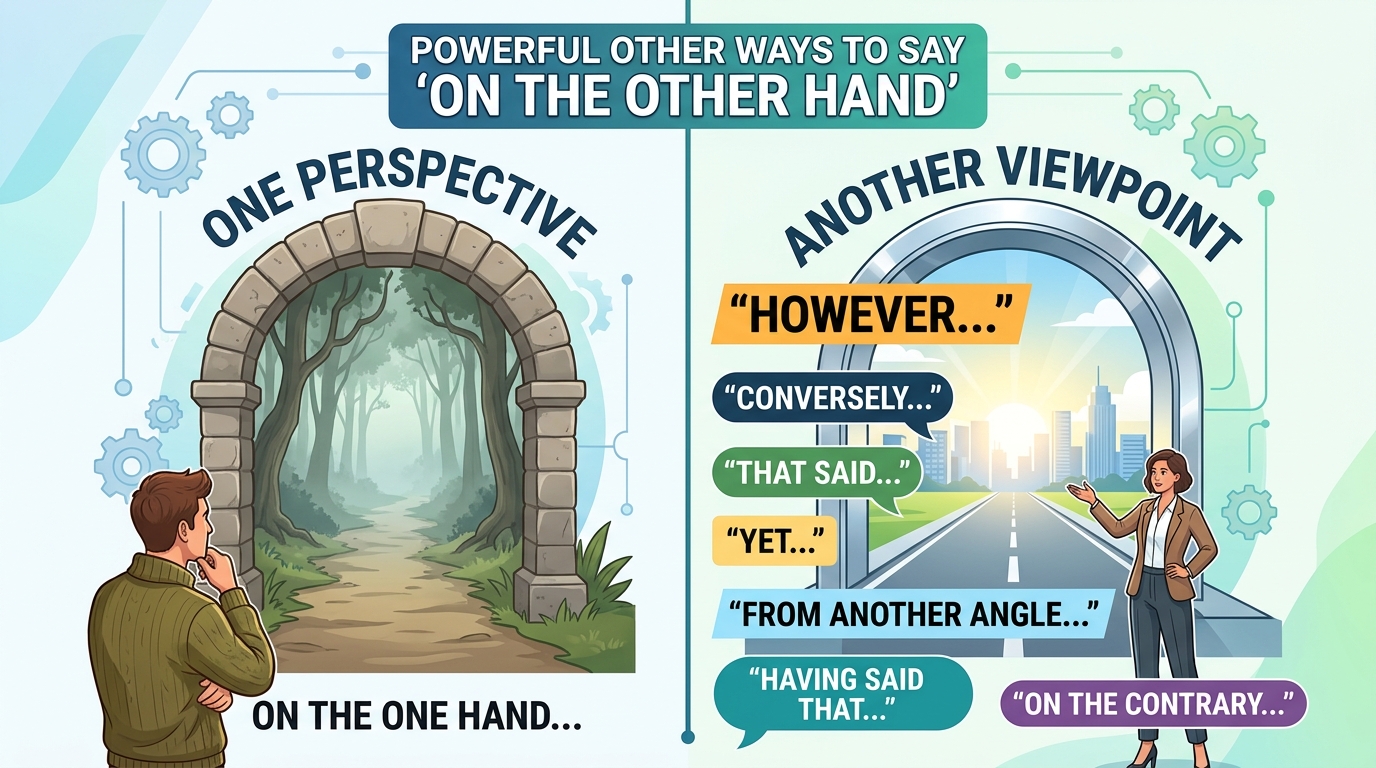
The best other ways to say on the other hand include however, alternatively, in contrast, conversely, meanwhile, whereas, still, yet, on the contrary, and then again. These transition phrases help writers compare different ideas, show contrast clearly, and improve sentence flow while making writing feel smoother and less repetitive. Many people use these alternatives in essays, blog posts, SEO articles, business writing, academic content, and conversations to create more natural and professional communication.
Understanding Other Ways to Say On the Other Hand ✨
OTHER WAYS TO SAY ON THE OTHER HAND are extremely important in modern writing because transition phrases help readers understand contrasting ideas clearly and smoothly. Writers often use on the other hand when comparing two opinions, situations, arguments, products, emotions, or perspectives. However, repeating the same phrase again and again can make writing feel robotic, repetitive, and less engaging for readers.
Modern content writing especially focuses heavily on readability and natural sentence flow. Search engines, AI writing systems, and online readers prefer content that sounds conversational, human written, and varied instead of repetitive or overly mechanical. This is why professional writers usually replace repeated transition phrases with smoother and more natural alternatives.
Another reason people search for other ways to say on the other hand is tone flexibility. Some transition phrases sound formal and professional while others feel conversational, casual, persuasive, emotional, or analytical. Choosing the right alternative helps writers communicate ideas more effectively depending on audience and purpose.
Strong transition words also improve SEO performance because natural language patterns increase readability and user engagement. Google SEO systems and AI readability algorithms usually reward content that feels easy to understand and pleasant to read. Sentence variety keeps readers interested while helping content feel authentic instead of artificially optimized.
Whether someone is writing essays, blogs, marketing copy, SEO articles, emails, research papers, social media captions, or business reports, using different alternatives instead of repeating on the other hand improves writing quality instantly. In this complete guide, you will learn the best other ways to say on the other hand including meanings, writing styles, grammar usage, professional alternatives, conversational phrases, SEO benefits, and modern communication techniques.
However as Another Way to Say On the Other Hand ✨
However is one of the most common and professional other ways to say on the other hand in English writing. It creates clear contrast between ideas while helping sentences sound polished, intelligent, and organized. Writers commonly use however in academic essays, business communication, SEO articles, reports, and professional discussions because it feels smooth and universally accepted.
One reason however became extremely popular is because it works in almost every writing style. It can sound formal in research papers while still feeling natural enough for blogs and online communication. Compared to on the other hand, however usually feels shorter, cleaner, and more direct which improves sentence readability significantly.
However also helps writers avoid overly long sentence structures. Modern readers prefer concise and easy to follow communication instead of complicated transitions. Because of this, however remains one of the strongest transition words for modern content writing.
Writers especially prefer however in analytical discussions where comparing ideas clearly matters. It creates strong logical contrast while keeping the writing professional and structured. SEO writers also use however because readability improvements often increase user engagement and content quality signals.
When to use it: Academic writing business communication and SEO content.
What vibe it gives: Professional polished and intelligent.
In Contrast as Another Way to Say On the Other Hand ✨
In contrast is another powerful transition phrase that clearly highlights differences between ideas, situations, opinions, or products. Writers often use in contrast when comparing two subjects directly because it sounds structured and easy to understand.
One reason in contrast works so well is because readers instantly recognize that a comparison is being made. This improves readability and organization especially in educational or informational content. Many bloggers and SEO writers use in contrast to help readers process information more smoothly.
Compared to on the other hand, in contrast feels slightly more formal and analytical. It is especially common in academic writing, comparison articles, research discussions, and professional reviews. However, it still sounds natural enough for blogs and online writing.
Modern content creators often use in contrast because comparison based articles perform strongly in search results. Readers usually enjoy content that clearly explains differences between products, opinions, services, or trends. Using in contrast helps structure these comparisons professionally while keeping writing engaging.
Another advantage of in contrast is flexibility. It works equally well in short sentences, long analytical discussions, and SEO optimized content. Because readability matters heavily in online communication, phrases like in contrast help improve user experience significantly.
When to use it: Comparison articles analytical writing and educational content.
What vibe it gives: Clear organized and professional.
Alternatively as Another Way to Say On the Other Hand ✨
Alternatively is commonly used when introducing another option, perspective, method, or solution. Unlike some stronger contrast phrases, alternatively usually sounds softer and more flexible while still helping readers understand different possibilities.
Writers often choose alternatively because it creates smoother transitions between ideas without sounding overly argumentative. This makes it useful in business writing, tutorials, guides, educational blogs, and professional discussions.
Modern readers usually appreciate writing that feels balanced and thoughtful instead of aggressive or overly forceful. Alternatively helps create this tone naturally. It allows writers to introduce another viewpoint while maintaining conversational flow and readability.
SEO writers also use alternatively because user friendly sentence structure improves engagement. Online readers prefer content that feels easy to follow rather than complicated or overly academic. Alternatively keeps communication smooth while still clearly presenting contrast or another possibility.
Another reason alternatively became popular is because modern communication increasingly values flexibility and open minded discussion. Instead of forcing strong opposition between ideas, alternatively introduces different options more naturally and professionally.
When to use it: Tutorials guides business writing and educational content.
What vibe it gives: Flexible thoughtful and smooth.
Conversely as Another Way to Say On the Other Hand ✨
Conversely is one of the most formal and sophisticated other ways to say on the other hand. It is commonly used in academic writing, analytical reports, professional discussions, and advanced essays because it sounds intelligent and refined.
Writers usually choose conversely when discussing opposite situations or logical reversals. The phrase creates strong contrast while keeping the sentence structured and professional. Because of its formal tone, conversely is especially common in research papers and corporate communication.
Although conversely sounds more advanced than some alternatives, it still improves readability when used correctly. Readers often associate conversely with logical reasoning and professional analysis which increases writing credibility.
SEO writers sometimes avoid using conversely too frequently in casual content because it may feel overly formal for general audiences. However, in educational blogs, technical discussions, or business reports it works extremely well.
Another advantage of conversely is precision. It clearly signals that the next idea directly contrasts with or reverses the previous statement. This clarity improves reader understanding and strengthens communication quality.
When to use it: Academic reports analytical discussions and formal writing.
What vibe it gives: Sophisticated intelligent and structured.
Meanwhile as Another Way to Say On the Other Hand ✨
Meanwhile can sometimes work as another way to say on the other hand especially when discussing another situation, event, or perspective happening at the same time. It creates smooth transitions while keeping writing conversational and natural.
One reason meanwhile became extremely common in modern writing is because it sounds human and easy to read. Blogs, social media content, storytelling articles, and SEO writing often benefit from softer conversational transitions like meanwhile.
Unlike stronger contrast phrases, meanwhile usually feels more relaxed and narrative focused. It helps writing flow naturally between different points without sounding overly formal or rigid.
Content creators also use meanwhile because storytelling based writing performs well online. Readers often connect more with articles that feel conversational and engaging instead of overly technical. Meanwhile supports this style effectively.
Another important benefit of meanwhile is pacing. It helps guide readers smoothly between ideas while maintaining sentence rhythm and readability. This makes it useful for blogs, news style content, lifestyle writing, and informational articles.
When to use it: Storytelling blogs conversational writing and online content.
What vibe it gives: Natural smooth and engaging.
Whereas as Another Way to Say On the Other Hand ✨
Whereas is commonly used to compare two contrasting ideas directly inside the same sentence. It sounds structured, professional, and organized which makes it useful in essays, reports, contracts, and formal comparisons.
One reason writers use whereas is because it creates clear distinction between two subjects quickly. Readers instantly understand that a comparison is happening which improves readability and sentence clarity.
Compared to on the other hand, whereas often sounds more concise and formal. It is especially common in legal writing, academic essays, and analytical discussions where precise comparisons matter.
SEO writers sometimes use whereas in comparison articles because it helps structure content efficiently. Readers searching for comparisons between products, services, or opinions usually appreciate direct and organized explanations.
Another advantage of whereas is readability efficiency. Instead of using multiple sentences to explain differences, writers can combine ideas smoothly inside one well structured sentence.
When to use it: Comparisons formal writing and analytical discussions.
What vibe it gives: Structured precise and professional.
Yet as Another Way to Say On the Other Hand ✨
Yet is a short but powerful transition word that creates strong contrast quickly and effectively. Writers often use yet because it sounds modern, impactful, and easy to read while still expressing opposing ideas clearly.
Modern digital communication heavily favors concise wording. Because of this, yet became extremely popular in headlines, marketing content, social media writing, and persuasive articles. Short transitions usually improve readability and engagement online.
Compared to on the other hand, yet feels faster and more emotionally impactful. It creates strong sentence rhythm which helps writing sound confident and modern.
Marketing writers especially prefer yet because persuasive communication often benefits from quick and memorable sentence structures. Readers are more likely to stay engaged when content feels direct and energetic.
Another reason yet works so well in SEO writing is readability speed. Online readers often skim content quickly, so concise transition words improve user experience and information flow significantly.
When to use it: Headlines marketing writing and persuasive content.
What vibe it gives: Strong modern and impactful.
Still as Another Way to Say On the Other Hand ✨
Still creates softer contrast compared to stronger transition phrases like however or conversely. It helps writing feel emotional, conversational, and human while still connecting opposite ideas naturally.
Bloggers and lifestyle writers commonly use still because it sounds warm and relatable. Readers often connect more deeply with content that feels authentic and emotionally natural instead of overly professional or rigid.
Still is especially useful in storytelling, motivational writing, and personal communication because it softens contrast without removing meaning. This creates smoother emotional flow throughout the content.
SEO writers also use still because conversational writing styles often perform better online. Readers typically spend more time engaging with content that feels personal and human written.
Another advantage of still is flexibility. It works naturally in casual conversations, social media captions, blogs, and even some professional discussions depending on tone.
When to use it: Storytelling blogs and conversational writing.
What vibe it gives: Soft relatable and natural.
On the Contrary as Another Way to Say On the Other Hand ✨
On the contrary is used when strongly disagreeing with or correcting a previous statement. It creates direct contrast while sounding confident and assertive.
Writers often use on the contrary in debates persuasive writing and argumentative discussions where strong opposition between ideas matters. Compared to on the other hand, it feels more forceful and deliberate.
Because on the contrary sounds stronger, writers usually use it carefully in professional communication. Overusing aggressive transition phrases can make writing feel confrontational instead of balanced.
However, when used correctly, on the contrary creates powerful emphasis and helps arguments sound confident and organized. Readers instantly recognize that the writer is challenging or reversing a previous idea.
Another benefit of on the contrary is clarity. It leaves little confusion about the writer’s position which improves communication strength in persuasive contexts.
When to use it: Debates persuasive writing and argumentative discussions.
What vibe it gives: Bold direct and confident.
Why Writers Use Other Ways to Say On the Other Hand ✨
Writers use different transition phrases because repetitive wording weakens readability and engagement. Modern readers prefer natural sentence variety and conversational flow instead of robotic repetition.
Sentence variation improves:
- Readability
- User engagement
- Professional appearance
- Human sounding communication
- SEO performance
- Reader trust
Search engines and AI readability systems also reward natural writing patterns. Using varied transition phrases helps content feel authentic while improving overall quality.
SEO Benefits of Using Other Ways to Say On the Other Hand ✨
SEO writing depends heavily on natural language and smooth readability. Using different transition phrases improves:
- NLP optimization
- User experience
- Reader engagement
- Human sounding tone
- Sentence rhythm
- Content quality signals
Modern SEO focuses strongly on user satisfaction. Content that feels smooth and conversational usually performs better than repetitive or awkward writing.
What Not to Do While Using On the Other Hand Alternatives ✨
Avoid:
- Repeating however excessively.
- Using overly formal transitions in casual blogs.
- Combining multiple contrast phrases together.
- Forcing advanced vocabulary unnaturally.
- Creating awkward sentence structures.
Natural readability always matters more than sounding overly sophisticated.
Did You Know 🤔
Studies on online readability show that readers stay longer on pages with conversational writing and varied sentence structures. Transition phrases help guide readers smoothly through content which improves engagement and SEO performance.
FAQ About Other Ways to Say On the Other Hand
What can I say instead of on the other hand
You can use however, alternatively, conversely, in contrast, whereas, meanwhile, still, yet, and on the contrary depending on tone and context.
Which alternative sounds most professional
Conversely, however, and in contrast usually sound the most professional in academic and business writing.
Which alternative works best for casual writing
Still, meanwhile, and yet work best in conversational blogs and social media content.
Why should writers avoid repeating on the other hand
Repeating the same transition phrase too often makes writing feel robotic repetitive and less engaging.
Do transition words improve SEO writing
Yes transition phrases improve readability user engagement sentence flow and overall SEO content quality.
Conclusion
Learning powerful other ways to say on the other hand can instantly improve writing quality, readability, SEO performance, and sentence flow. Alternatives like however, alternatively, conversely, meanwhile, whereas, still, and yet help writers create smoother and more natural communication without sounding repetitive or robotic. Whether writing essays, SEO articles, business reports, blogs, social media captions, or professional content, using varied transition phrases helps writing feel more engaging, polished, and human written while also improving user experience and modern search engine optimization.